title: Behind the Scenes: How Professional Video Production Actually Works description: A practical guide to behind-the-scenes video production — from pre-production planning and on-set roles to post-production workflows used in UK broadcast and corporate media. language: en-GB geo: United Kingdom
Most finished videos look effortless. That impression is the result of weeks of structured work that viewers never see. Understanding what happens behind the camera — across every phase of production — helps clients brief better, set realistic timelines, and get more from their production budget.
What "Behind the Scenes" Actually Covers
In professional media production, "behind the scenes" refers to everything outside the final cut: the planning meetings, location scouts, equipment prep, on-set coordination, and the hours of post-production work that follow a shoot day. For broadcast and corporate video alike, this hidden workflow typically accounts for 60–80% of the total project time.
Pre-Production: Where the Real Work Begins
A shoot day rarely runs longer than 10–12 hours. Pre-production, by contrast, can span two to six weeks depending on project scope. This is where most production problems are either prevented or created.
Key pre-production activities:
- Creative development — scripting, storyboarding, shot-listing
- Location scouting — assessing lighting conditions, acoustic properties, access logistics
- Casting and talent coordination — sourcing presenters, actors, or interview subjects
- Equipment scheduling — cameras, lenses, lighting rigs, audio kits, stabilisers
- Risk assessments and permits — mandatory for public locations and broadcast in the UK
- Call sheets — distributed 24–48 hours before each shoot day
A detailed call sheet typically includes crew roles, location addresses, parking arrangements, equipment allocation, shot schedule, and emergency contacts. Missing any of these creates delays that compound through the shoot day.
On-Set Roles in a UK Production Crew
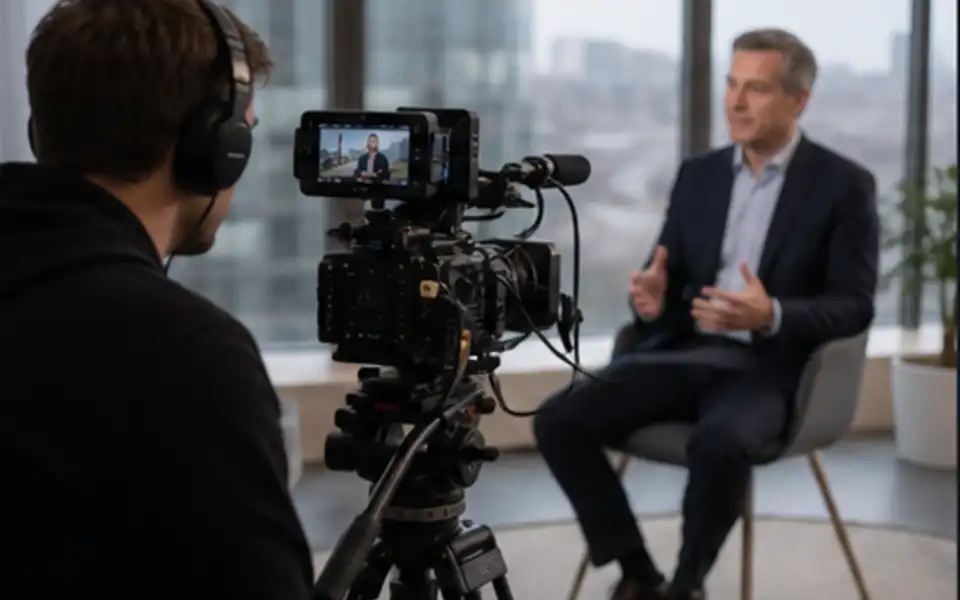
Crew size depends on production type. A corporate talking-head shoot might run with three people. A live event or broadcast production can require 15–30 crew members across multiple departments.
| Role | Responsibility | Typical Production Type |
|---|---|---|
| Director | Creative decisions, talent direction | All |
| DOP / Camera Operator | Exposure, framing, lens selection | All |
| 1st AC | Focus pulling, lens changes, slates | Drama, broadcast |
| Gaffer | Lighting design and execution | Corporate, broadcast |
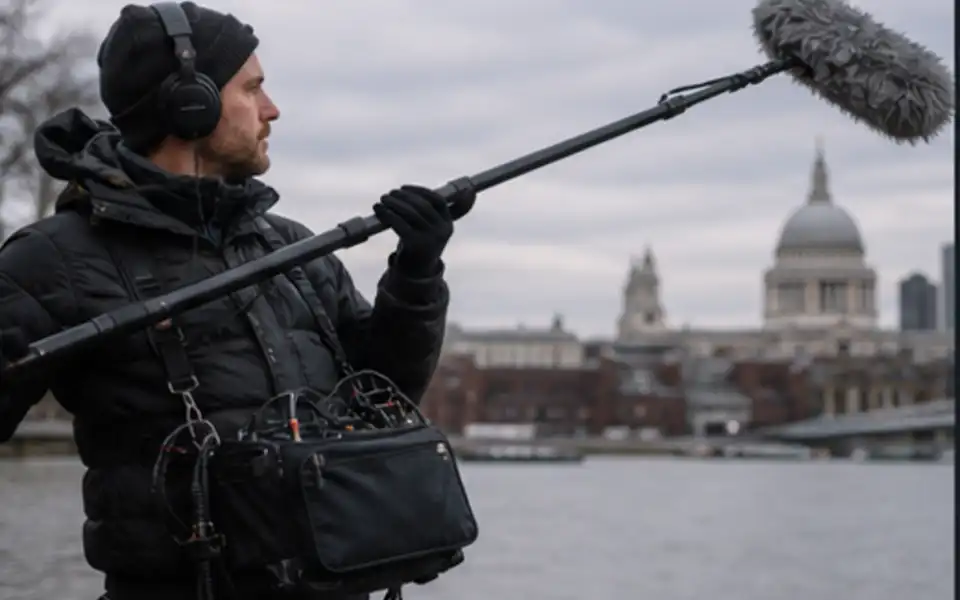
| Sound Recordist | Boom, radio mics, monitoring | All |
| Production Manager | Logistics, budget, scheduling | Mid-to-large productions |
| Runner | On-set support, equipment movement | Most productions |
| Script Supervisor | Continuity tracking | Drama, narrative content |
| Vision Mixer | Live switching between camera feeds | Live events, broadcast |
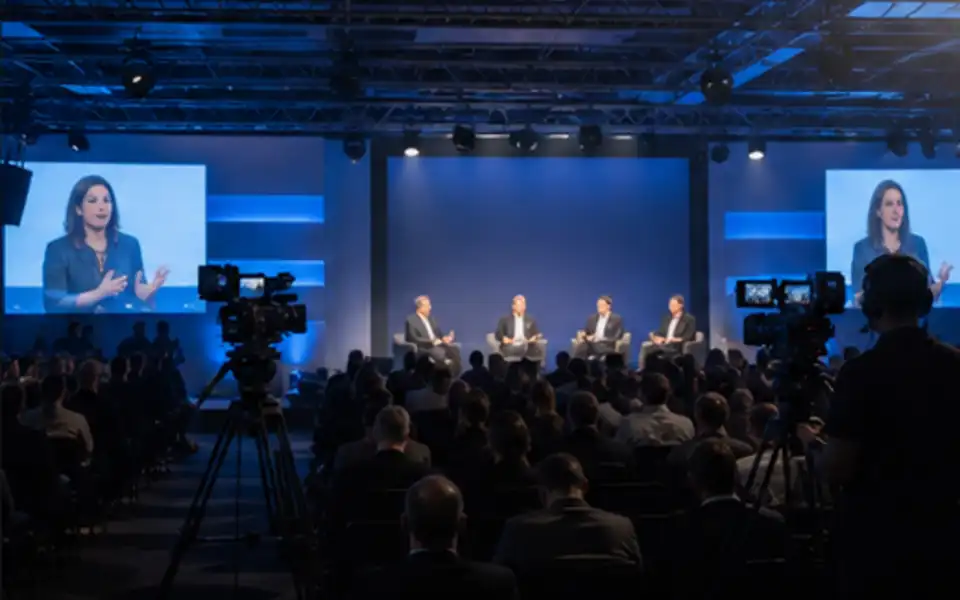
On a live event production — a conference, product launch, or awards ceremony — the crew structure shifts significantly. A vision mixer, broadcast engineer, and EVS operator become critical. These roles do not appear in a standard corporate shoot but are non-negotiable for multi-camera live broadcast.
Camera and Technical Setup: What Actually Takes Time
A common client assumption is that the camera crew arrives and starts shooting within minutes. In practice, a well-lit, properly exposed, broadcast-standard setup takes between 45 minutes and two hours depending on location and lighting conditions.
Setup typically involves:
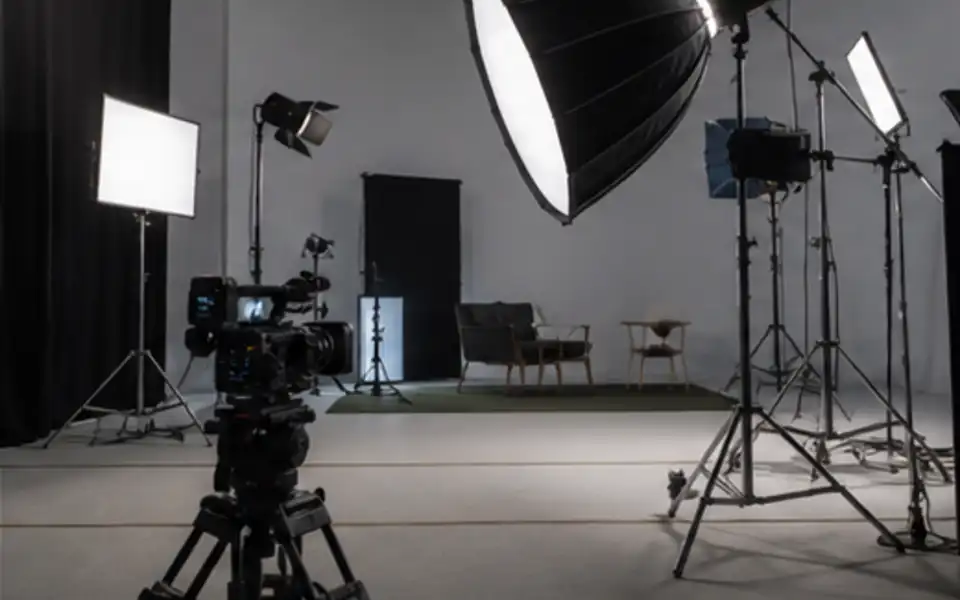
- Rigging and testing all lighting — including checking for mixed colour temperatures from ambient sources
- Camera checks — white balance, exposure, framerate, codec selection, focus calibration
- Audio testing — radio mic placement, gain levels, monitoring for RF interference
- Rehearsal passes — particularly important for interviews and presenter-led content
- Safety checks — securing cables, flagging trip hazards, confirming fire exit access
The choice of codec matters significantly in broadcast work. Productions destined for BBC, Channel 4, or Sky delivery typically require recording in formats such as Apple ProRes 422 HQ or XAVC-I at minimum. Delivery specifications vary by broadcaster and must be confirmed in pre-production, not post.
Post-Production Workflow in Detail
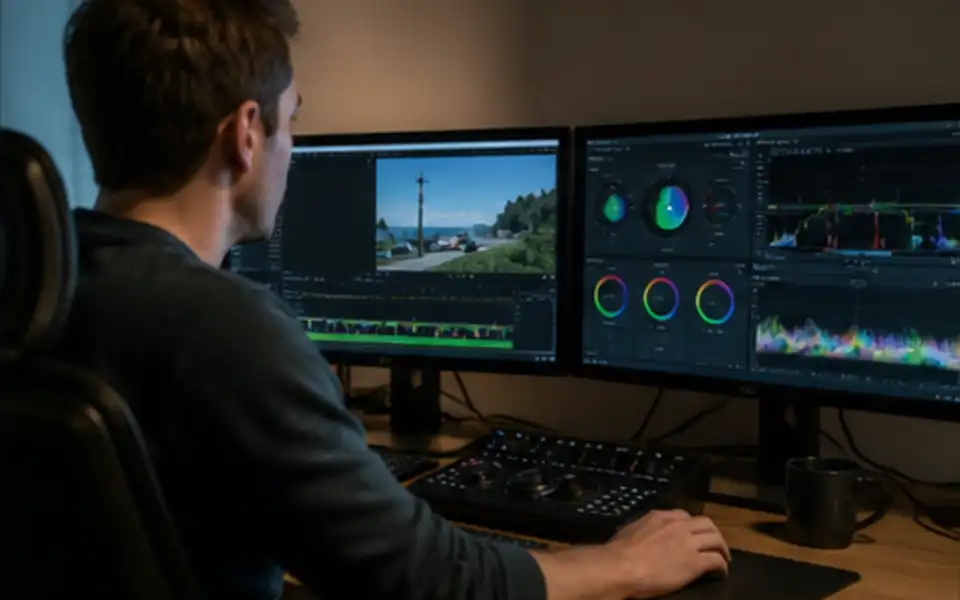
Post-production is routinely underestimated by clients who have never seen a professional timeline. A three-minute corporate film does not take three hours to edit. A rough cut alone — before colour grading, audio mix, graphics, or revisions — often requires 12–20 hours of work.
Typical Post-Production Stages
| Stage | What Happens | Typical Duration |
|---|---|---|
| Ingest and sync | Footage transfer, audio sync, proxy creation | 2–6 hours |
| Rough cut | Selecting takes, building the narrative structure | 8–20 hours |
| Fine cut | Tightening pacing, removing excess, refining flow | 4–10 hours |
| Colour grade | Matching shots, applying a visual grade, broadcast LUTs | 4–12 hours |
| Audio mix | Levels, EQ, noise reduction, music licensing | 4–8 hours |
| Graphics and titles | Lower thirds, motion graphics, end cards | 4–16 hours |
| Review and revisions | Client feedback rounds (typically 2–3 rounds) | Variable |
| Master export and delivery | Format encoding, quality control, delivery upload | 1–4 hours |
Colour grading is where visual consistency is established across all shots. An experienced colourist working in DaVinci Resolve will match exposures from different lighting setups, apply a specific look, and ensure the output meets broadcast technical specifications — including luma range, chroma values, and loudness standards (EBU R128 for European broadcast).
Audio: The Most Underestimated Element
Poor audio degrades a production faster than any visual problem. Viewers tolerate average images. They do not tolerate distorted dialogue or inconsistent room tone.
Common audio issues caught in post-production that should have been fixed on set:
- Radio mic rustling from clothing (fixed with proper placement and a windshield)
- Room echo in corporate offices (addressed with acoustic treatment or room selection)
- RF interference from Wi-Fi equipment, phones, or nearby broadcast infrastructure
- Inconsistent levels between interview subjects recorded in different rooms
An audio mix for a 5-minute film typically involves 20–40 tracks: dialogue, room tone fills, music, sound design, and any voiceover. The final deliverable is exported to EBU R128 or ATSC A/85 loudness standards depending on the target platform.
Live Events: Behind the Scenes on the Day
Live event production operates with no safety net. Every technical decision is made in real time, and errors broadcast immediately to the audience — in person or remotely.
A typical live event production infrastructure includes:
- OB van or flyaway kit — housing vision mixing, audio mixing, and replay systems
- Multi-camera setup — typically 3–6 cameras for a conference or awards show
- IEM (in-ear monitor) system — for director-to-presenter communication
- Broadcast-grade audio console — managing 20–60 audio channels for a large event
- Streaming encoder — for simultaneous online broadcast
- Redundant recording — at least two independent recording paths to avoid total loss
The director calls each camera cut in real time via talkback. A typical one-hour live event involves 300–600 individual cut decisions. Timing relies on detailed rundowns prepared in advance, but the director must respond to on-stage changes — a speaker running long, a technical fault, a late entrance — without interrupting the viewer experience.
What Clients See vs. What Actually Happened
The gap between a polished deliverable and the production reality is worth understanding, particularly for clients commissioning video for the first time.
| What the Client Sees | What Was Required to Produce It |
|---|---|
| A 90-second brand film | 3 shoot days, 6 weeks pre-production, 40+ hours post |
| A clean interview setup | 90 minutes of rigging, 3 lighting setups, audio testing |
| Smooth camera movement | A gimbal operator with 4+ hours of calibration and rehearsal |
| Consistent colour across shots | A colourist working 6–8 hours in DaVinci Resolve |
| Broadcast-ready audio | A separate audio mix stage, not just camera audio |
| Animated lower thirds | 4–8 hours of motion graphics work per set of titles |
This is not an argument for inflating budgets. It is the basis for realistic planning — and for understanding why professional production has the costs it does.