Corporate video is one of the highest-ROI content formats available to UK businesses in 2026 — when done properly. A poorly produced video undermines credibility faster than no video at all, which is why production decisions matter beyond budget alone.
What Corporate Video Actually Covers
The term "corporate video" is broad enough to be nearly useless without qualification. In practice, it spans several distinct formats, each with different production requirements, crew sizes, and post-production workflows.
| Format | Typical Length | Primary Use |
|---|---|---|
| Brand / company overview | 90 sec – 3 min | Website homepage, investor packs |
| Internal communications | 2 – 5 min | Staff briefings, policy rollouts |
| Product demonstration | 60 sec – 2 min | Sales teams, e-commerce, trade shows |
| Testimonial / case study | 1 – 3 min | Proposals, landing pages |
| Training and onboarding | 5 – 20 min | LMS platforms, HR portals |
| Event highlight reel | 2 – 4 min | Post-event marketing, social |
| Recruitment video | 60 – 90 sec | Career pages, LinkedIn |
Each format requires a different approach at the scripting stage. A training video needs instructional logic; a brand overview needs narrative arc. Treating them the same way is the most common briefing mistake.
The Brief: Where Most Projects Go Wrong
Most corporate videos that underperform do so because the brief was vague at the start, not because the production quality was low. A solid brief answers five questions before a camera is ever discussed:
- Who is the specific audience — not "customers" but the actual decision-making person watching this
- Where will it be shown — platform, context, device, whether it will autoplay without sound
- What should the viewer do, feel, or understand after watching
- What tone is appropriate — formal, conversational, documentary-style
- Are there brand guidelines, existing footage, or voice-over requirements
A production company working in broadcast and corporate video will often run a pre-production discovery session before quoting. This is a good sign, not a delay — it prevents expensive reshoots.
Pre-Production: The Phase That Determines Everything
Pre-production typically represents 30–40% of the total project timeline but is frequently underestimated in budget conversations. It includes:
- Concept development and creative treatment
- Scriptwriting or interview framework preparation
- Location scouting and permissions (especially relevant for UK shoots involving public spaces or licensed premises)
- Shot list and storyboard creation
- Casting or identifying on-camera talent
- Scheduling — accounting for travel, lighting conditions, and availability
In the UK, location permits for filming in public spaces are managed at a local authority level and can take 2–4 weeks to process. This is often overlooked when clients set tight turnaround expectations.
Production Day: What to Expect on Set
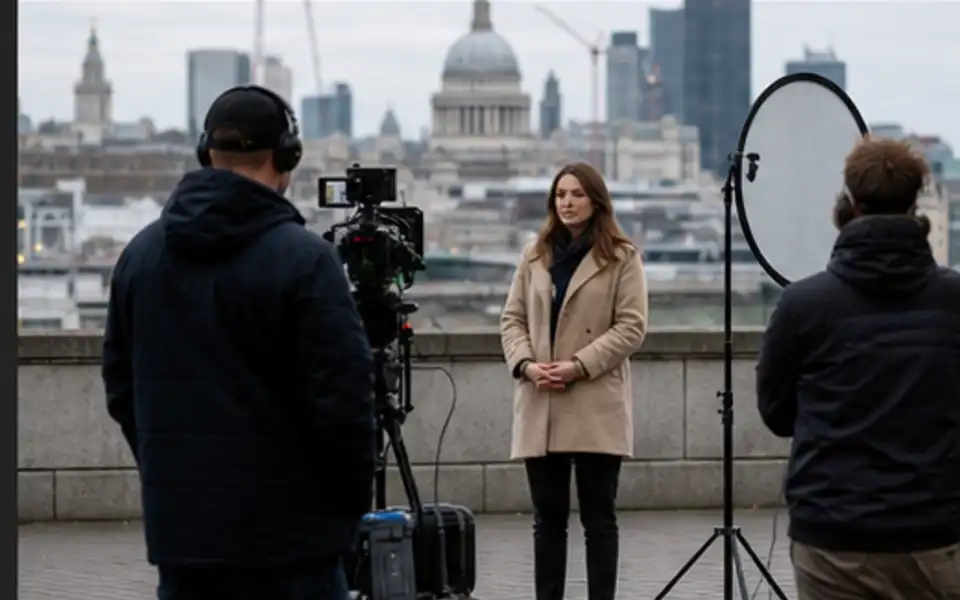
A professional corporate shoot involves more people than most clients anticipate. Even a modest single-day shoot typically requires:
| Role | Responsibility |
|---|---|
| Director / Producer | Creative and logistical oversight |
| Director of Photography | Camera operation, exposure, framing |
| Camera Operator (if separate) | Second angle or B-roll coverage |
| Sound Recordist | Boom, lavalier mic placement, monitoring |
| Lighting Technician | Grip, stands, modifiers |
| Production Manager | Scheduling, logistics, client liaison |
Reducing crew to cut costs tends to affect audio quality first, then lighting. Both are harder to fix in post-production than most clients realise. Dialogue recorded in a reverberant conference room with a camera-mounted mic is a common and expensive problem.
Expect a corporate shoot day to run 8–10 hours including setup and wrap. Attempting to compress this to 4–5 hours while maintaining the same shot list is a frequent source of tension between clients and production teams.
Post-Production: Timeline and Deliverables
Post-production for a standard 2–3 minute corporate video in the UK typically takes 3–5 weeks. Factors that extend this timeline:
- Multiple review rounds (each round adds 3–7 working days)
- Music licensing — cleared commercial tracks from libraries such as Musicbed or Artlist take less time than commissioning original score
- Motion graphics and animated title sequences
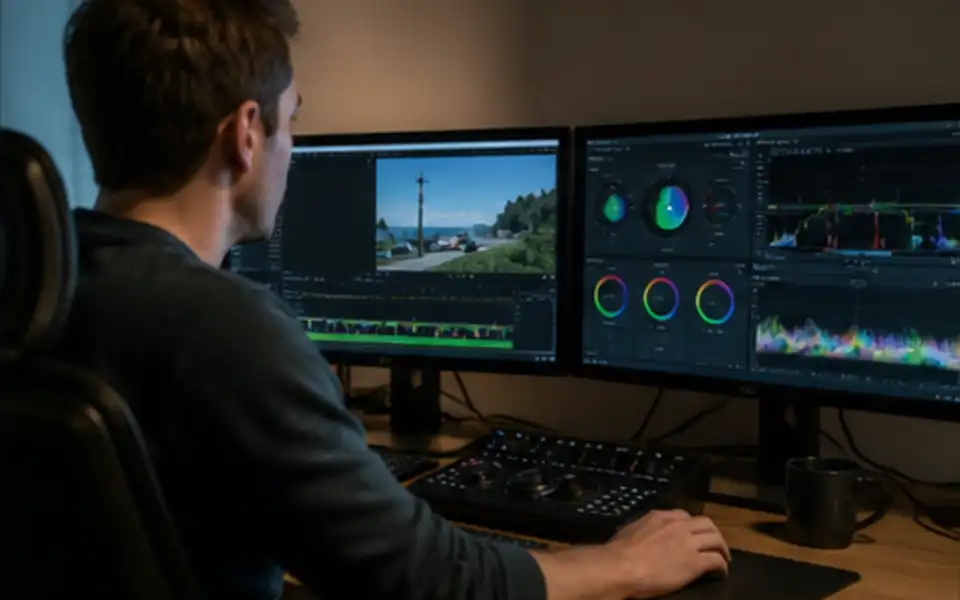
- Colour grading to brand specification
- Subtitle and caption files (required for accessibility under UK Equality Act compliance for internal comms)
- Multiple output formats for different platforms
A structured feedback process matters. Two review rounds with consolidated notes from one decision-maker is far more efficient than five rounds of fragmented feedback from different stakeholders.
Typical Post-Production Stages
- Offline edit (assembly cut)
- Rough cut with temp music and placeholder graphics
- Fine cut for client review
- Grade, sound mix, and final graphics
- Master export and platform-specific deliverables
Costs: What the UK Market Looks Like in 2026
Corporate video production pricing in the UK varies significantly by scope, not just by company size. These are realistic ranges for full-service production in 2026:
| Project Type | Budget Range (GBP) |
|---|---|
| Simple talking head / testimonial (1 day) | 2,500 – 6,000 |
| Brand overview video (1–2 shoot days) | 8,000 – 18,000 |
| Multi-location corporate film | 20,000 – 50,000+ |
| Internal training module (per 5 min video) | 5,000 – 12,000 |
| Event highlight reel (1-day event) | 3,500 – 8,000 |
These figures include production and post but not talent fees, extensive animation, broadcast licensing, or distribution. Day rates for experienced UK camera crews currently sit between 600 and 950 GBP per person.
Getting a quote significantly below these ranges is worth investigating carefully — the gap usually appears in post-production hours, equipment specification, or crew experience.
Distribution: Production Value Is Wasted Without a Plan
A video that isn't seen doesn't deliver return. Distribution should be considered during pre-production, not after the master file is delivered.
Key considerations for UK corporate video distribution:
- LinkedIn performs strongest for B2B corporate content in the UK; native video uploads outperform links to external hosting
- YouTube remains the default for SEO-accessible video content but requires proper metadata — title, description, chapters, closed captions
- Embedded website video benefits from a landing page built around the video rather than the video being buried in a page
- Internal video on company intranets should be hosted on platforms that support access controls (Vimeo Enterprise, Microsoft Stream, Kaltura)
- Trade event and conference screens typically require specific aspect ratios and file formats — often 1920x1080 MP4 at a higher bitrate than web delivery
What Separates Competent Production from Exceptional
The technical floor for corporate video production has risen substantially. Affordable camera systems like the Sony FX6 or Blackmagic URSA now produce broadcast-quality images. This means the differentiators have shifted:
- Directing on-camera subjects — knowing how to get a natural, credible performance from a non-actor executive is a specific skill
- Sound design and music selection — these elements affect perceived production value more than picture quality in viewer testing
- Narrative structure — whether the video has a beginning, middle, and end that holds attention
- Brand coherence — whether every visual and audio choice reinforces the same identity
- Knowing what not to include — corporate videos frequently run long because no one was willing to cut the CEO's full speech
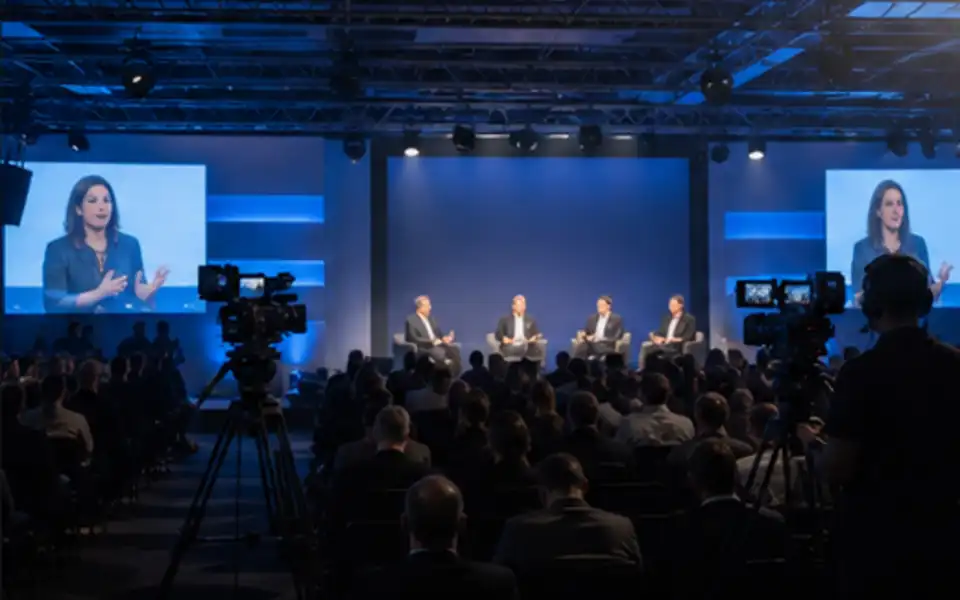
A production company with broadcast and live event experience brings technical and editorial disciplines that are directly transferable to corporate work — specifically around working under pressure, multi-camera operation, and delivery to precise specifications.
Working With a Production Company: Practical Advice
- Send a written brief before any call — it clarifies your own thinking and saves everyone time
- Ask to see work in the same format as your project, not just a showreel
- Clarify revision rounds and what constitutes a revision in the contract
- Agree on deliverable formats in writing before production begins
- Build in a 20% contingency on both budget and timeline for projects over 10,000 GBP
The relationship works best when the client provides clear direction on objectives and approvals, and the production team has genuine creative input on execution.