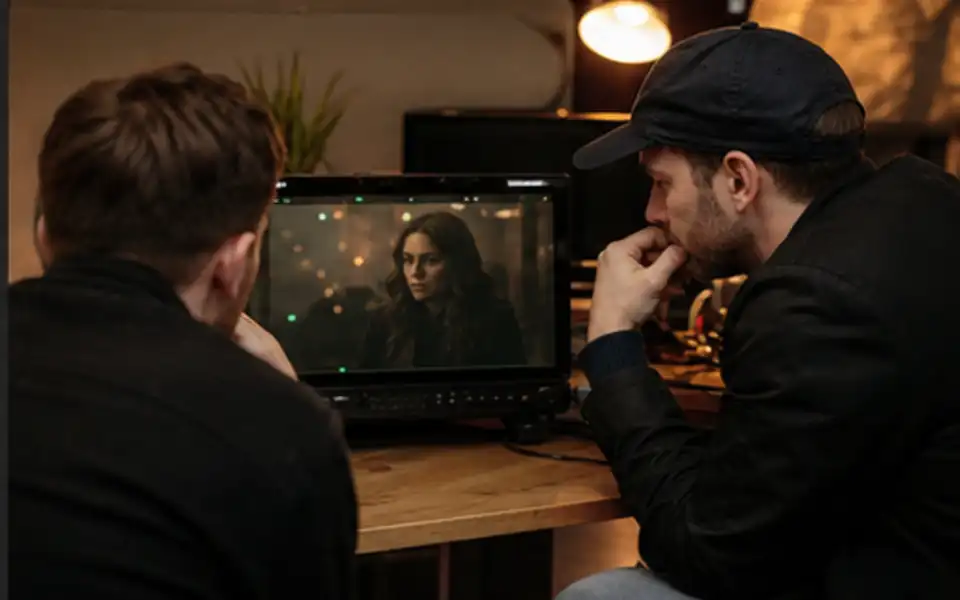
Equipment hire sits at the centre of every production budget decision. Whether you are crewing a single-camera corporate interview or a multi-camera live event, the gear you choose determines what is achievable on the day, and what it costs in post.
What Equipment Hire Actually Covers
"Equipment hire" in a broadcast and video production context means short-term rental of camera systems, support equipment, lighting rigs, audio packages and ancillary grip — typically by the day, half-day or week.
It is not the same as a full production service. Hire covers hardware. Crew, transport, insurance and consumables are usually quoted separately, and conflating them is one of the most common reasons production budgets overrun.
Core categories:
- Camera systems — cinema cameras, broadcast ENG cameras, mirrorless hybrids, PTZ units for live streaming
- Lenses — prime sets, zoom ranges, broadcast-standard servo lenses
- Support — tripods, fluid heads, sliders, jibs, remote heads, gimbals
- Lighting — LED panels, HMI units, tungsten kits, softboxes, grip accessories
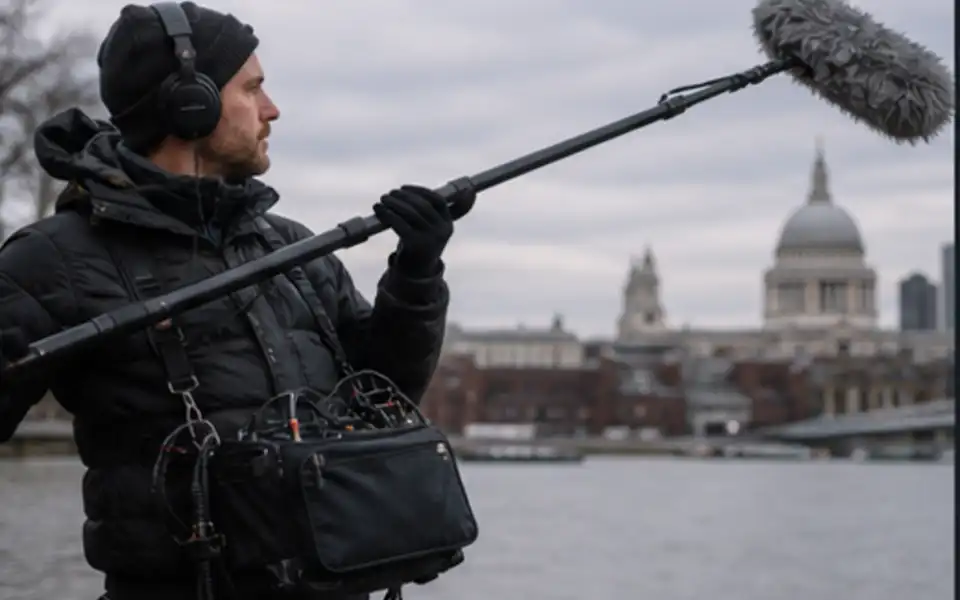
- Audio — boom poles and hypercardioids, radio mic systems, portable recorders, mixers
- Power — batteries, V-lock plates, portable generators for location work
- Monitoring — on-set field monitors, waveform monitors, video village setups
- Broadcast infrastructure — vision mixers, multiviewers, IFB systems, comms
Why UK Production Companies Hire Rather Than Own
Outright ownership makes sense for a narrow band of kit used every week. For everything else, hire is more rational.
| Factor | Own | Hire |
|---|---|---|
| Upfront cost | High | None |
| Depreciation risk | Yours | Hire house's |
| Maintenance and service | Yours | Usually included |
| Access to latest models | Limited by budget | Hire house updates stock |
| Insurance | Annual premium on all assets | Per-project, often from existing PI/PL policy |
| Storage | Required | Not required |
A Sony VENICE 2 body costs around £35,000 to purchase. Hire rates in the UK run at approximately £450–£600 per day depending on the supplier and package. For a company shooting three or four large productions per year, hire is the straightforward answer.
Key Equipment Categories Explained
Camera Packages for Corporate Video
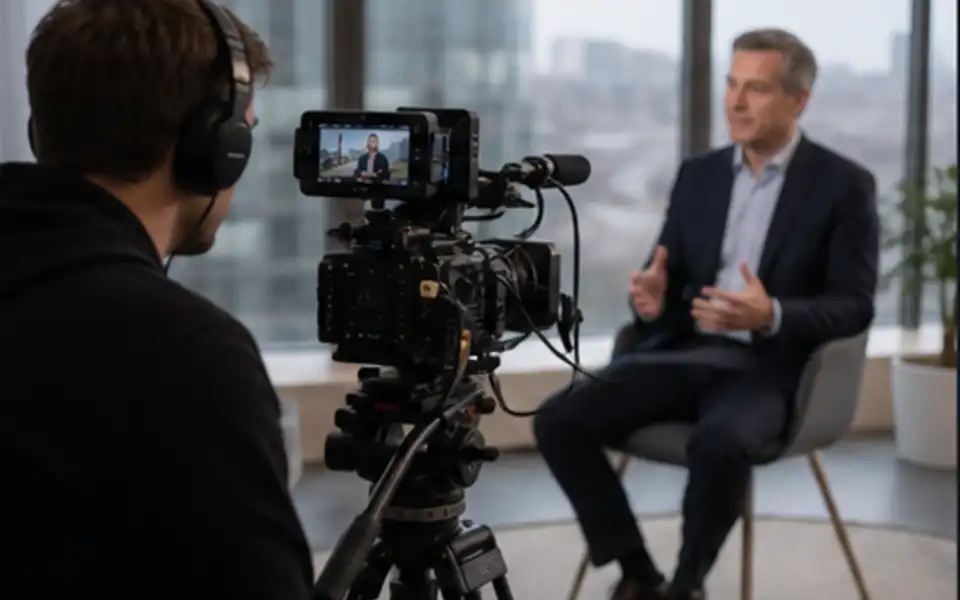
Corporate video work in the UK predominantly uses Sony FX6, Sony FX9, Canon C70, and ARRI ALEXA Mini depending on the grade of production. An FX6 with a matched lens set, monitor and batteries is a workable single-camera package. For talking heads, interview series or internal communications content, this is usually sufficient.
Where productions need a cleaner log or RAW workflow for heavy grading, the FX9 or ALEXA Mini is the more common choice. Expect day rates of:
| Camera Body | Typical UK Day Rate (2026) |
|---|---|
| Sony FX6 | £120–£180 |
| Sony FX9 | £200–£280 |
| ARRI ALEXA Mini | £380–£500 |
| Canon C70 | £100–£150 |
| Blackmagic URSA Mini Pro 12K | £150–£220 |
These are body-only figures. A full camera package with lenses, support, batteries and monitoring typically runs 2–3x the body rate.
Lighting for Live Events and Location Shoots
LED panels have largely replaced tungsten on location in the UK. Bi-colour LED — panels such as Aputure 600d Pro, ARRI SkyPanel S60, and Litepanels Gemini — give DoPs control over colour temperature without gelling, which matters on quick turnaround corporate shoots.
For live events, lighting requirements split into two areas: production lighting for stage and set, and camera lighting for any simultaneous broadcast or recording. These often need to be coordinated; a rig designed purely for a live audience can create exposure and colour problems for cameras if no one has consulted the DOP.
Audio Packages
Broadcast-standard audio hire in the UK typically means:
- Sennheiser MKH 50 or MKH 416 for boom work
- Lectrosonics, Wisycom or Sennheiser G4/G5 for radio mics
- Sound Devices 664, 888 or MixPre series for portable recording
- Zoom F8n Pro as a cost-effective alternative for lower-budget shoots
One common mistake on equipment hire orders: teams specify camera and lighting carefully, then underspec audio. A poor radio mic system in a noisy venue generates ADR costs that far exceed the saving on hire.
What to Check Before You Book Equipment
Not all hire houses in the UK operate to the same standard. Before committing to a booking, work through the following:
Condition and service history Ask when the camera was last serviced and sensor-cleaned. Ask whether the rental includes a pre-shoot check and how faults on collection are handled.
Mount and format compatibility Confirm lens mounts match your package. PL, EF, E-mount and LPL are not interchangeable without adaptors, and adaptors introduce flange depth variables that matter on close-focus work.
Media and recording formats Confirm what media the camera requires — CFexpress, SxS, CFAST — and whether it is included or hired separately. Some hire houses charge per card, others include a set.
Insurance requirements Most UK hire houses require proof of production insurance or a damage deposit. Production insurance from specialist brokers typically covers hired-in equipment. If you are a freelancer or a smaller production company, check your existing policy covers the specific hire value; some policies have per-item caps.
Delivery and collection logistics Larger hire houses in London (facilities are concentrated in Soho, Ealing and Park Royal) offer same-day delivery within the M25. Outside London, lead times of 24–48 hours are more realistic. For live events or location shoots, factor this into your production schedule.
Cancellation terms Productions change. Confirm whether a cancellation within 48 hours carries a charge. Standard UK industry terms often apply a 50% cancellation fee within two working days.
Building a Hire Package for a Live Event
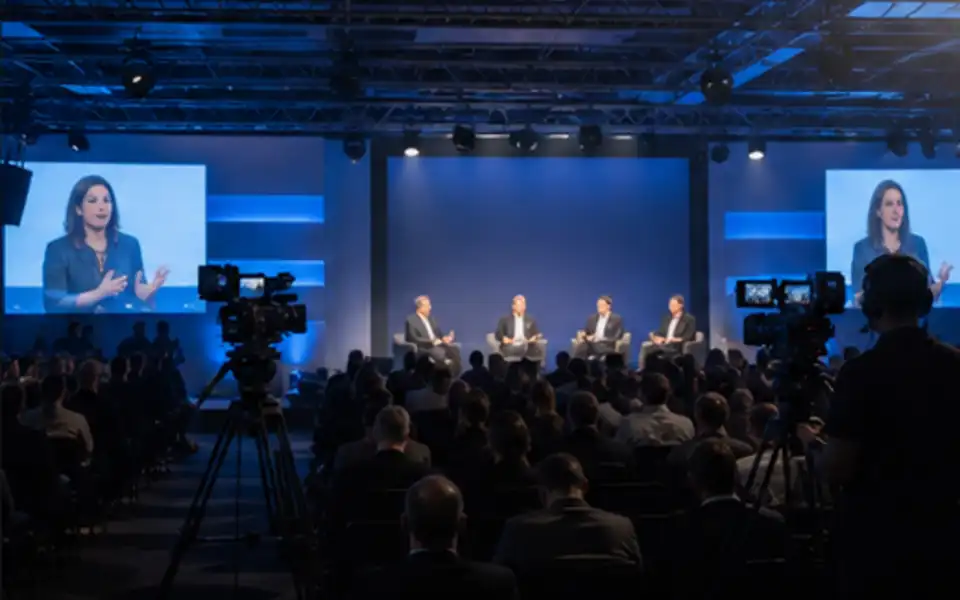
Live event production — a conference, a product launch with simultaneous streaming, an awards ceremony — requires a more layered equipment package than a standard shoot.
A workable multi-camera live event package for a 500-person conference with streaming would typically include:
| Category | Kit | Notes |
|---|---|---|
| Cameras | 3x Sony HDC-3500 or equivalent broadcast camera | With matching CCUs and OCP |
| Lenses | 1x wide angle, 1x short zoom, 1x long zoom | Match to camera mount |
| Support | 2x fluid head tripods, 1x pedestal or jib | Depending on venue access |
| Vision mixing | Blackmagic ATEM 2 M/E or equivalent | With control surface |
| Monitoring | Multiviewer, confidence monitors, director's monitor | |
| Comms | IFB or intercom system | For director-to-camera communication |
| Audio | Mixing desk, radio mics, DI boxes for FOH split | Separate from house PA |
| Encoding | Hardware encoder for stream (LiveU, Teradek) | If streaming via cellular or IP |
The above is a starting framework. Venues with existing AV infrastructure may already have some elements in place, which affects what you need to hire and what you can use in-house.
Showreel and Behind-the-Scenes Productions
Corporate showreels and behind-the-scenes content often run on tighter budgets than broadcast commissions. This is where mirrorless camera packages — Sony A7S III, Canon R5C — come into their own. They offer cinema-quality image in a smaller form factor, lower hire cost, and are less intimidating in environments like factory floors or boardrooms.
For behind-the-scenes content specifically, consider:
- A compact gimbal (DJI RS3 Pro, Tilta Float) rather than a dolly
- A single bi-colour LED panel for run-and-gun lighting
- Lavalier radio mic rather than boom for ambient interview pickup
The tradeoff is that compact packages require a more experienced operator to manage limitations. A smaller sensor and faster lens combination in low light will handle a factory floor; it will struggle in the same way a full-size camera kit would not.
Broadcast Production: Specific Hire Considerations
Broadcast production for UK television — whether commissioned by a streamer, a network or produced for a corporate broadcaster — operates under technical delivery specifications that affect your hire choices.
UKTV, Channel 4 and Sky each publish delivery specs. The AS-11 wrapper, DNxHD codecs, audio loudness standards (EBU R128) and frame rate requirements (25fps for UK broadcast) all have implications for what you hire and how you configure it.
Key broadcast-specific hire items often overlooked:
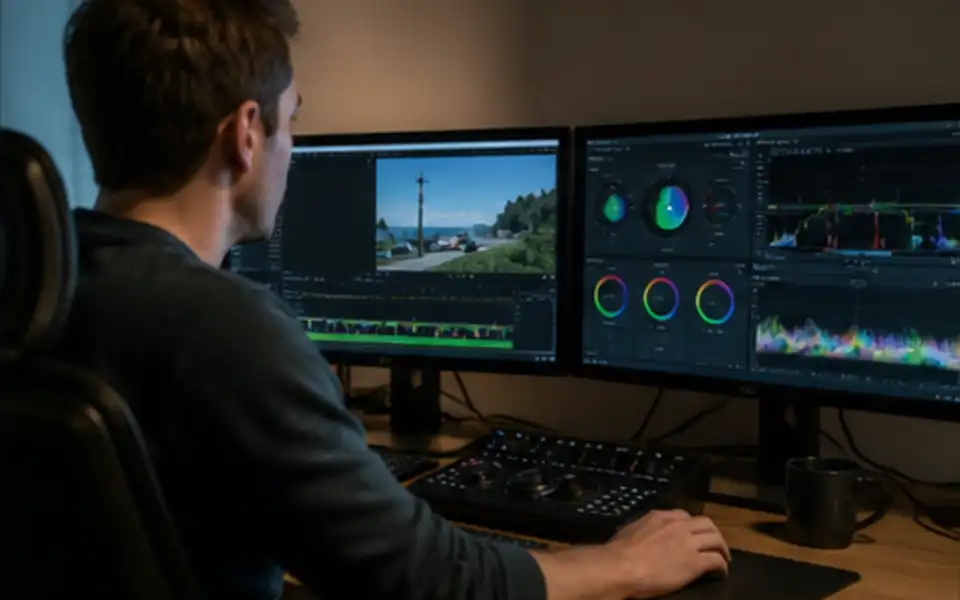
- Waveform monitor and vectorscope — essential for broadcast-compliant exposure and colour
- Reference monitors — hire-grade Sony BVM or Flanders Scientific rather than relying on in-camera LCD
- Timecode distribution — critical for multi-camera sync and post workflows
- Intercom and IFB — for floor managers, directors and camera operators working simultaneously